Showing posts with label Review. Show all posts

Thursday, 16 December 2010

Narrative Lecture part 11: The Mist

The next film we watched for our Narrative lecture is The Mist (2007)


The film began with our protagonist David Drayton going to the nearest supermarket, with his son and neighbour, to get some supplies and tools to repair his house that was wrecked in the storm that hit his area. All of a sudden a man came rushing in telling everyone to lock the doors and don't go outside because there's something in the mist. At first the public looked in confusion but when they saw the people outside the super market disappearing and screaming. The store manager then asked his staff to lock the doors and told everyone to stay in until we know what's happening.
However this was no easy task since everyone in the store are losing their minds, some wants to leave while others believe this is the work of god.

The main focus of the film is not on the mystery of the mist but on the public's reaction to something that is unknown to them. It reveals the public's true colours that they are weak and they need something to give them meaning and a purpose. However looking for such a thing can be quite dangerous and will make you a treat. An example would be the antagonist of the film Ms Carmody, she is a very religious person who believe in a vengeful god who punishes those who steps in his territory. She points out that the events that are happening to them is what is mentioned in the bible and they need to make blood sacrifices to please god.
This makes her very dangerous because the public became vulnerable and will listen to anyone who would make sense, even if the person the public is listening to is crazy. She uses this to the full effect and started to gain followers which she can control. Carmody became their leader and she makes the decisions for them.
I felt this film really explore the human nature of finding meaning and purpose in the world, showing they will find comfort in the most unlikely places. Which is why I like this film for exploring the public losing hold on reality and on their hunt for a purpose in the world.

Tuesday, 7 December 2010

Narrative Lecture part 10: Tremors (1990)

The next movie we watched for our Narrative lecture is Tremors.


The plot of the film is about two handymen who are planning to leave their home to find a better job, but while on their way out the two of them saw a lot of weird things. A woman looking at tremors that never appeared in the first place, a drunk who die of dehydration and mysterious murders. The two handymen soon found out it was a monster who was causing all of these events and it is up to them to stop it.
We watched this film as an example of another type of monster budget movie with an actual monster as the villain.
The main idea of the film is about survival, trying to stay alive from a dangerous monster who gets smarter every time.
This film is very different from what I am used to because not many of the cast died and they all stand their ground against a monster and win. The film also shows that if you have the greatest plan ever it doesn't go as smoothly as you hope it would. If you are trying to distract the monster or set up a deadly trap, the plan won't work the second time because the monster becomes aware of the plan. The animatronics really help in bringing the monster to life because of it's texture and movements as well as the overall design of the monster that you can actually believe that this can be real. That's why I enjoyed this films because of the little blocks to the characters' plans and showing how deadly a monster can be when it gets smart, as well as the effectiveness of the animatronic on the monster.

Monday, 6 December 2010

Narrative Lecture part 9: Arachnophobia (1990)

The next film we watched for our Narrative lecture is Arachnophobia


The story of Arachnophobia is about a group of scientist lead by an entomologist going to the Amazon jungle looking for a new type of bug. While on their search they end up finding a new breed of spider, which they decided to examine it when they return home to see what makes the spider unique. While on their return they unknowingly brought with them a live spider which made it's way to a small town where it will start a new colony of spiders.
We watched this film to see an example of a horror budget film which uses a creator as a monster. This films plays on the public's fear of spiders and to me it did it with great success because of how the spiders move and the way the music is used to describe the action of the spiders.
The way it plays is like a murder mystery but instead of a person, the public where looking for the illness that was killing everyone which turns out to be poison from a spider. Some of things they mentioned in the film was very questionable on the spider for example they move like an ant colony and are organised and their poison acts very fast, but then again the public are dealing with a new breed of spider so of course the spiders won't work like an ordinary spider.

Monday, 29 November 2010

Postmodernism part 10: Shaun of the Dead

The final film we watched for our Postmodernism lecture is Shaun of the Dead(2004)


The film is about the world being infected by Zombies and our hero Shaun has to save the people he cares about and take them to the pub for safety until the whole zombie situation calms down.
This film is considered postmodern for taking a complete twist on the Zombie genre, instead of having cool looking characters we have an average man who works at a electronic shop and his freeloading buddy who's a slob going their way to save the people they care about. The main characters even planned on how the two of them will pull off the big rescue and take everyone to a safe place, but it all blew up in their faces. The people slowly died one by one and they had to destroy the pub which they thought was safe, and all of this happened in one day.
This movie is also a pastiche of classic Zombie horror films by referencing quotes from past Zombie films to how the the Zombies act and how to kill them. However even though there was a lot of chaos in the movie, the main characters still had fun with it, like killing the zombies, running them over to actually acting like them.
Funnily enough this movie is considered a romantic comedy even though there weren't many elements of romance, there were a lot of comedy and horror, I guess you can see Shaun saving his girl friend as part of the romance side but not much.
This movie is a complete parody of Zombie movies and a good one, has all the stuff a parody of the genre would have and much more.

Narrative Lecture part 8: Mars Attacks (1996)

The film we watched for our narrative lecture is Tim Burton's 'Mars Attacks'


The plot of Mars Attack is that Earth is invaded by Martians, who the humans thought were peaceful, but it turns out they want to take over the world.
This film is an adaptation of a card game that was based on the sci-fi films of the 1950's. With crazy over acting people and budget like clothes for the Martians. I believe this film really captured the 1950's feel with it's story and setting but also added some recent technology to it to show that the film your watching is dated but recent at the same time. With the use of camera movement by actually going close to the actors as well as the actions that were taking place in the film. It is also a very daring film by killing off big named actors at the time who you would think that they will survive at the end of the movie. However where it really shines is it's use of CG, the visual effects is stunning. Actually believing that some of the events that happened in the film could be possible, that there could be aliens with big heads, lazer guns that can incinerate people to their bones and giant robots that rampage across the city. Even though the CG at the time was dated it is still impressive and it also help delivering a satisfying 1950's sci-fi film.

Monday, 22 November 2010

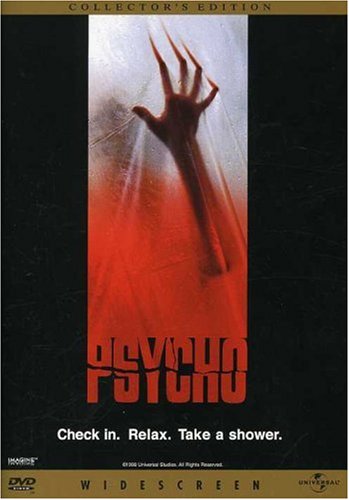
Postmodernism part 9: Psycho 1998 Remake

The next film we watched for Postmodernism is the 1998 remake of Alfred Hitchcock's Psycho staring Vince Vaughn as Norman Bates.


The story is about a murder mystery of Marion Craine, who embezzled the company she was working for and was on the run. The police, a detective and even her sister and Marion's lover is looking for her with the leads pointing towards the Bates Motel as her last known location.

This film is considered postmodern for being a shot by shot remake of the 1960's classic. It had some changes here and there to show times has changed but the majority shots are the same from opening credits to the end. A lot of the public did not like this film because it is a copy of the old film with not many new ideas of its own. However there are many ways to interpret this film, one can see this as tribute to the old film for being true to it's source or a coloured version of the old film. As for me I see it as a true remake for being unoriginal and shouldn't be shunned for that but in fact it should be praised for being a proper remake.

Friday, 12 November 2010

Postmodernism part 8: Dancer in the Dark

The next film we watched for Postmodernism is 'Dancer in the Dark' staring Bjork as the main character Selma Jezkova.


The plot of the film is about Selma, a struggling mother who is going blind, getting money for her son's operation but it wasn't easy because she had to go through a lot of obstacles, one of which is to keep her job while hiding her condition form her boss, attending her play recitals and saving up the money.
The reason this film is considered Postmodern is because it is a musical within a musical, focusing on the main character's fixation on musicals that it always makes her happy and she wants to be in one herself. However unlike other musicals this film ends in a sad ending instead of the typical happy ending.
What I Believe also makes this film Postmodern is how it feels like a play, the way it transitions from one place to another and how the actors act. What else gave this movie theater feel is how the ending ends, when the curtain closes on the Selma with the camera panning upwards, having the actors stop moving with no sound playing, helping us suck in the atmosphere that this moment is meant to be intense.
I like this film because it has us feeling sorry for the main character Selma that a lot of bad things happens to her but she is an innocent character that it seems no good rewards come to her, but it does when she got the money for her son's operation. Thats why I like this movie because even though it ends in a sad note you can still feel a bit happy for her knowing that she was able to help her son.

(On a personal note, the other reason I like this film is that how tough having blindness is and I could relate because someone dear to me is going through that soon which is my sister. To get an idea of the level of blindness she has, get a straw from the nearest shop and look through it, thats whats going to happen to her soon until she sees nothing but darkness. No need to worry because she is strong and is also looking for solutions to cure it or at least finding new ways to see thing.)

Narrative Lecutre part 7: Them! (1954)

The next film we watched for our Narrative lecture is 'Them!'


The plot of the film is about a police officer investigating the disappearance of the public which turns out to be mutated ants who are spreading across the globe, this involve the military and its up to them to prevent the ant from spreading even more.
This film is considered as one of the first atomic aged movies as well as one of the quintessential monster movies. It was also meant for 3D but the producers stopped when they broke the camera, so there are scenes that are meant to poke at you.
This may also be considered as a big budget movie because the giant ants are animatronic and there are a lot of them.
This movie might be playing on the public's fear on the uses of nuclear power that it might mutate a creature and turns them into a monster, showing that using such energy is dangerous that there must be alternate and safer ways to get energy.
Even though the movie was long it was quite enjoyable seeing the type of special effects used in the 1950's, even now I believe the effects are pretty good because at that time they had to create their own monsters and make them look realistic.

Monday, 8 November 2010

Postmodernism part 7: The Truman show

The next film we watched for Postmodernism is The Truman Show.


The film is about Truman Burbank discovering that his life is not what it seems. That his world has certain routines. The way people walk, talk and the way they act. Soon he learnt that his life was a TV show for peoples amusement and he wants out.

This movie is considered Postmodern because it has the character challenging the Director. That he does not want to be kept in a cage and wants to live his own life.
What made this film interesting is that Truman knows how his world operates and how to escape as well, the problem is how he is going to execute it.
Another thing that makes this film interesting is the idea of a man (Truman) taking on something that is bigger than him, like he is challenging god (the director), that he demands his own independence even if it cost him his life.
That's why I like this movie because it is a story of someone small fighting something that is bigger than him.
Now a days television is trying to replicate that feeling by making reality tv which in my opinion is a waste of time, because in realities tv the people know they have to entertain the public but they do it in such an odd way that it felt acted, like people fighting each other or running around naked, example big brother.
However in Truman Show he is a born character living in the life of fiction believing it was reality, and what made this film more successful is how it gives the actual audience a taste of Truman's life of how the audience in the film watches his show.

Postmodernism part 6: Adaptation.

The film we watched for Postmodernism is Spike Jonze 'Adaptation.'.


The movie is a about a screen writer named Charlie Kaufman who is struggling to write a story based on the book 'The Orchid Thief' which is different from what he is use to writing. Having him doing massive research on the book and still have nothing to write. He goes to orchid gardens, writer seminars with a famous writer even asked his brother for some help, until he finally decided to write about himself writing his troubles on working on the screenplay for the film.

To me this movie has a Mulholland Drive feel to it, by that I mean it has many stories with lots of characters, but unlike Mulholland Drive, Adaptation goes in a straight motion without making too many side stories that it confuses the audience.
The number of stories I can see in this film is three. The first being the main character Charlie Kaufman, who is struggling in writing a screen play based on the book that was given to him. The second is the other main character Susan Orlean, who is on a quest in looking for the ghost orchid to see what is so special about it. Finally the third is when Kaufman comes across the love affair between Orlean and her lover John Laroche and she wants to cover it up by killing Kaufman.
What makes this film Postmodern is that it is based on the screen writer's actual difficulty in writing the screen play for the book. From him looking for help in writing his screen play to actually writing something that felt a bit too far fetched to be real, mostly near the end.

Narrative Lecture part 5: House of Wax (1953)

The next film we watched for our Narrative lecture is André De Toth's 'House of Wax'.


It stars Vincent Price as a wax sculptor named Henry Jarrod who is obsessed with his creations. Until a business partner burnt his gallery with Jarrod in it. After that event mysterious murders started beginning with the business partner. Soon a new gallery opened displaying new wax models by Jarrod, one of the new models is the same business partner in the same position he died in. We are then introduce to Sue Allan, who is investigating the murder of her friend and the disappearance of her body. She finds the body at the same wax gallery playing Jone of arc.

This movie is meant to be one of the first films done in 3D, and it really shows because they are not being subtle. An example of can be shown when we see a man with some paddle balls advertising the wax gallery, he even spoke in a manner that it seems he is talking to the audience.
The narrative of the film was pleasing as a murder mystery movie but the camera angles where bad, it focus at odd places especially near the beginning when Jarrod was fighting the business partner, but the shots where done in a way that the audience felt they were in the film. However at times I felt the film focused more on the 3D than on the actual film it self which most films do when they are making a film in 3D. The public can see this as a reference for making a movie in 3D, how you see this is up to you. The positive is that the film is trying to draw the audience in the film making them feel they are involved, but the negative side is that it trying too hard to show it is a 3D film that it loses its story and become distracting.

Friday, 22 October 2010

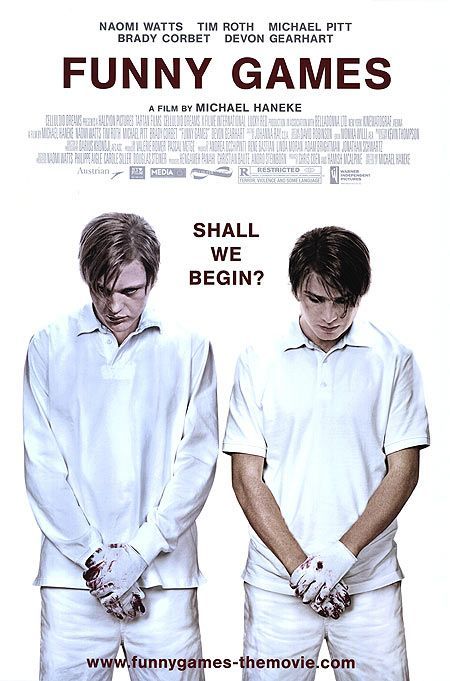
Postmodernism part 5: Funny Games U.S.

The next film we watched for our Postmodernism Lecture was Funny Games U.S.(2008)


The plot of the film is about Paul and Peter meeting the new family around the area acting neighbourly until the two of them holds the family hostage and challenge them into a game. If the family can stay alive by morning, if they do Paul and Peter will leave them alone but it won't be that easy.
This film is postmodern because the creator of the film remade this for the American audience and it kept most of the same scenes from the previous film released in Germany under the same name. It is also a new take on horror because Peter and Paul are not you typical killers. They are polite but also very creepy and they always ask in questions, an example is when Paul had a golf ball in his hand and he asked the family why does he have it, hinting out that he killed someone. What else made this film creepy is that Paul and Peter gave the family many choices but twist it to their favour. The film also constantly breaking the forth wall with Paul talking to audience by saying along the lines of do you want to see this horrible thing thats happening to this sweet family. While Peter plays the role of the audience by questioning the things they are doing like are you sure you want to let them live a little long we could end this right now. Even their origins of why they are torturing the family while in other horror films the killer has a reason why they are killing people but for them they don't they just doing it.
The film also teases the audience a lot too, by having one of the family members escaping but gets caught, having the phone working but can't call no one. Even have Peter getting shot but Paul brought him back to life by turning back time with a remote control.
So in conclusion this film is not meant to be enjoyed if you want a happy ending and it completely teases the audience to a high level.

Narrative Lecture 4: The Day the Earth Stood Still

The next film we watched for our Narrative lecture is The Day the Earth Stood Still 1951 version.


The plot is about an alien named Klaatu who came to earth to deliver an important message to the public, but kept on getting stopped so he decided to hide amongst the people to learned about them and gaining information to find a way to deliver his message.
This movie was known as the first of its kind for being different. Instead of having an alien invasion it has an alien delivering a message to the world. The message is the message of peace letting the people know that if they continue making more weapons of mass destruction they might take their war to an even higher place which is space. So Klaatu came to earth to say there are some aliens who won't stand for that and will prevent this by destroying earth, but they are willing to give earth a second chance by sending their robots to monitor them and if there are any violence they will eliminate it. Klaatu admits this plan isn't perfect but it will get the job done.
I believe what makes this movie successful is how it talks about the violence in the world and it might grow into other areas like space. The movie questions this and asked when will it end, how far will the violence go. What if there was a life form who discovers this and decided to take matters into his own hands by threatening the planet by destroying it. The film itself is a type of warning to the public making them aware that all these violence isn't good and there has to be another way to settle disputes.
People questions if the film is a B Movie or not but the truth is I don't care I thought the effects were good at it's time but where it really shines is the story of Klaatu's quest to bring peace to the world.

Monday, 18 October 2010

Postmodernism Lecture part 4: Moulin Rouge!

This time we looked at a Postmodernism in musical romance, and the film we watched as an example was Moulin Rouge! (2001)


The film is about Christian, a young writer, moving to Paris to learn about love. He went to a cabaret called the Moulin Rouge where he meets an actress name Satine. The two of them fell in love but a jealous duke won't allow it so he is finding different ways to prevent them from being together.

This film was amazing, it uses a lot of cliche romance rules. Examples of this would be the story for having the hero falling in love with a woman who is out of his league. The woman is also involve with someone powerful, but in the end the woman and the hero falls in love. Another part of it's clicheness to romantic stories is when the characters sings out their feelings.
The Postmodernism of the film comes from the music it uses. They are not made up but are actual songs preformed by actual singers. It only has one song that belongs to itself which is the main song but the rest are from other performers. Another example of Postmodernism is the pacing of the film, it began with a very fast pace which I believe is the point of view of Christian where he first entered Moulin Rouge and everything was fast and wild. The film then slows down putting us as the audience once again to see how will this love story will unfold.
This pacing is Postmodern because of how fast the first few minutes started out. You have Christian meeting his neighbours, being invited to the Moulin Rouge, meeting the girl of his dreams, asked to make a play for the Moulin Rouge and keep the love affair a secret from the duke. That when the film slows down you do not remember what happened but you know that Christian have a job of writing a play and has to keep his love affair a secret. In other words in those first few minutes we are Christian and when the film slows down we are back as the audience.

Narrative Lecture part 3: The Quatermass Xperiment

In this part of the lecture we looked at British narrative in film, we observed this by watching 'The Quatermass Xperiment'(1955).


The film began with a spaceship landing in a field causing a disturbance around the area. Police and firemen surrounds the spaceship waiting for their orders from the man who made the ship, Bernard Quatermass.
Once they investigated the ship they only found one survivor, a space engineer named Victor Carron. He was sent to the neariest hospital but before the paramedics left Victor told Quatermass help me.

This film gave off a frightening vibe, because Victor had a zombie like appearance on his face and his actions came out odd. He attacks plants at random and he always gave off the most frightening dead like expression. What also gave this film a scary feel is the way the deadbodies look when victor touched them, the deadbodies are very skinny to the bone which was a very good effect at the time. To help with the scarinest of the film it plays with the mystory of whats happening to Victor, by having some odd outburst and going through changes in his body and mind.
I believe what made this film unique is how it shows a different type of invasion, unlike the old sci-fi films at the time where they had aliens purposly coming to earth to take over. In Quatermass it was a non-contagious bacteria that effected one man and used him to absorb life around him to get itself bigger to send off spores to effect more people.
So in this film it was a bacteria that was threating earth and it was up to Quatermass to stop it because he felt responsible for it. Once he had stop the bacteria he still wants to carry on his experiment, to explore the far regions of space. That is what made this film unique with it's different way of story telling and exicution.

Tuesday, 12 October 2010

Postmodernism Lecture 3: Scream (1996)

The third film I have watched for Postmodernism is 1996 film Scream.


Scream is about a serial killer named Ghostface who is attacking teens and his next target is Sidney. This event reminds her of the murder of her mother which really effects her judgement thinking one of her friends could be the killer.
This movie uses a lot of horror movie references with the killer mysteriously appearing out of nowhere and taunting the victims to having the virgin lives in the end. I really like this movie and I could also see why this is considered Postmodernism because to me it feels like a parody/tribute to old horror films. A great example of Postmodernism would be Ghostface himself, for being a serial killer who is very clumsy and likes to taunt his victims, actual horror serial killers are actually quite silent and very careful on how they move. Yet Ghostface is able to get the job done and the teens actually defends themselves instead of acting foolish most of the time. Plus most of the people watch horror films to find some tips on how to stay alive from Ghostface.
Another example would be the ending where Sidney dressed up as Ghostface and uses his image to scare the actual killers, in old horror movies the female protagonist would never do that they would just run away screaming and end up lucky killing the killer.

Postmodernism Lecture 2: Mulholland Drive

The next movie I have watched, that gave another example of Postmodernism is Mulholland Drive(2001)


Mulholland Drive is about finding out the identity of a woman named Rita, who survived a car accident. The movie also has other miniature side stories like a man who dreamt of meeting a scary figure and it came true. A struggling director who finally gave in to the demands of his producers. And an assassin who struggled at covering up his tracks. But the main story is about Rita finding out who she is and who tried to kill her with the help of her friend Betty, which is some what answered in the end.
What makes this film Postmodernism is the different types of genre that were used in the film. Having a mix of detective stories, comedy, romance and thriller. The film gave me a confused yet amazement feel because it answered some of the questions like who tried to kill Rita but also left some questions unanswered as well, like what was the point of introducing the side characters, what purpose did they have. In the film it also knows that the characters are just characters with different roles and it can treat them however it wants, that the movie is its own character.
Like I mentioned before the ending did some what answered my questions but left some holes as well. The person who wanted to kill Rita was Betty because she was a jealous ex who wanted to make Rita pay. But when she did ordered a hit on Rita, Betty slowly went insane with her guilt and took her own life. At least that what I think, and the way the scene was done was in an explosive feeling, that the third act felt rushed yet not at the same time. Because to me the film is saying we'll give the audience the answer without a lot of padding, things that would drag out the movie even longer. Aleast thats how I see it.

Narrative Lecture part 2: Ed Wood

The next film we watched for our Narrative Lecture was Ed Wood(1994).


The movie is a biography on the worst director named Ed Wood, who take risks in making his films that he believes are great. The film shows how far Ed Wood is willing to go to produce his master piece and it depicts Ed Wood as a pretty nice guy making friends where ever he goes and bringing them to his films.
It also shows us Ed Woods fixation on Orson Welles and wanting to be just like him, a great director.
The movie also have Ed Wood questioning himself if he is doing the right thing, if he is even meant to be a director.
I believe this movie is meant to tell us what will happen if you have the drive for making a film but going about it the wrong way by taking one shots of scenes with no back ups, not enough money and doing things illegally like taking shots on locations that you don't have permissions for and stealing props.
But regardless of all the dangers, once it is done it will all be worth it in the end.

Saturday, 2 October 2010

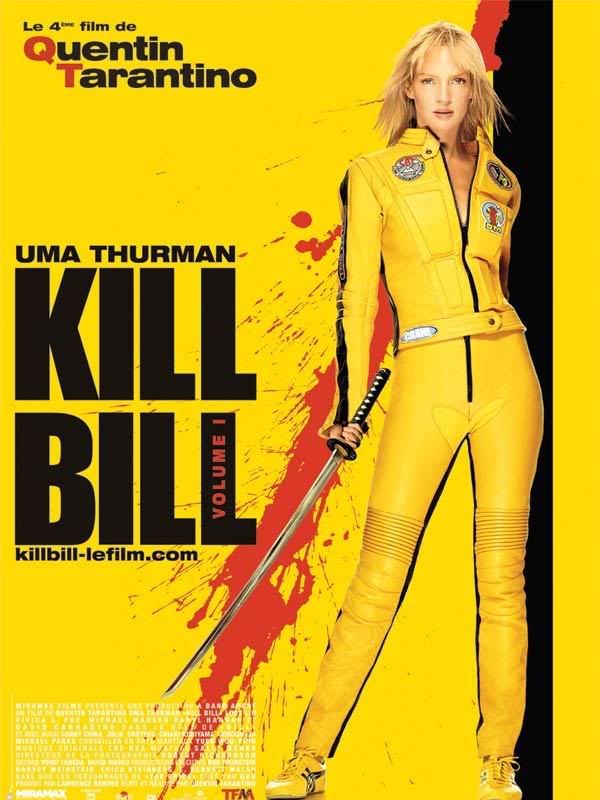
Postmodernism Lecture part 1: Kill Bill

On Wednesday the 22 we had a lecture about Postmodernism and why it is difficult to understand it. It's difficult because Postmodernism can be anything and it has a wide variety. Everyone has a different view on this subject but my general idea on it is that Postmodernism is a type of term used to describe anything that's a spin on modernity, things that were popular in culture for example Scary Movie is a parody of Scream which itself is a Postmodernism because the characters are mocking the horrors films and yet they are in one.

Postmodernism is not limited to just parodies, it can be used to describe media that does a tribute or has inspiration of other media, which brings us to the film I'm reviewing 'Kill Bill'.


The story is about the main character Black Mamba, portrayed by Uma Thurman, on her journey for revenge against the 'Deadly Viper Assassination Squard' for attacking her and almost killing her on her wedding day.
This movie is considered postmodernism because it carries some influence from old martial arts films with the style of how the action is portrayed, her quest for revenge and the level of violence used. There's even an anime cutscene when told of one of the Assassins back stories. All of this help gave this film it's own style and also as a type of tribute for the old action/revenges driven films.

Bad Kids Go To Hell Review

Two weeks ago my class was assigned to read and review comic book. I had trouble finding time to read it, but once I did I could see why my tutors asked us to read it. The comic we were asked to read was 'Bad Kids Go To Hell', it was made by Matthew Spradlin and Barry 'Bazz' Wernick.


Before I actually read the comic I did asked some of my class mates who did and one of them said it felt like a movie in book form and I also heard that it had a 'Breakfast Club' feel to it. How ever when I was reading it I could see some other film influences in it, I won't say what films they are to avoid some spoilers.
The story is about a group of trouble makers joining up in detention in the library for causing trouble in school. The characters are Megan the brains, Tarek another smart kid, Craig the jock, Tricia the cheerleader, Veronica the goth and Matt the underdog/loser. All six of these kids did something bad and they are all answered in the book. While they are serving their detention an angry spirit of an native Indian is wreaking havoc in the library and the kids need to get out before they are all dead.

Now when I head the title 'Bad Kids Go To Hell' I assumed they actually went to hell and had to fight for their lives or something. Which is pretty much true since they are going through their own hell mostly fear, paranoia and guilt. It also talks about how tough going to a private school can be with the stress of making your parents proud, baring with the school kids picking on you and the fear of graduation leaving school to move on to somewhere unfamiliar.
The book is not only about school kids having trouble with school but it is also mystery story finding out who or what is causing trouble in the library and why, which all will become obvious in the end.
So if any of you haven't read this book yet please do because it is really good, there are some nick picks here and there like the colours don't match and one of the characters hair style changes from elegant short haircut to something that some what resembles girly wolverine haircut and back, but it's nothing major the story is good the some of the characters are likable and the artwork is nice. So go and give it a read.