Showing posts with label Movie. Show all posts

Monday, 31 October 2011

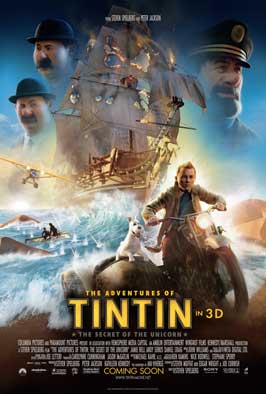
Movie Review: The Adventures of TINTIN: The secret of the Unicorn


Last night I watched the new Tintin movie in 3D at 8:20, I would of watched in 2D but there were no cinemas in my area that were showing the film in 2D late at night.
The plot of the film is about Tintin trying to uncover the secrets around a ship named the unicorn. However during his quest Tintin comes across a lot of trouble from people who are also trying to unsolve the mystery around the unicorn and will do anything to get them even kill Tintin or anyone who gets in their way. It then becomes a compition to see who will uncover the secrets of the of ship first.

When I heard that there was going to be a Tintin movie I had mixed feelings about it, mainly to the photorealism approch that the movie was using for their characters. However when I looked at some trailers it did captured my interests, so me and my family decided to make a day to watch the film to see if the movies was good or was just jumping on the CGI bandwagon. I can safley say that the movie was really good.

I will try my best not to give off too much spoilers on the movie because there are a lot of great stuff in it that I don't want to ruin it for those who want to watch it.
The film is mainly an origin story of how Tintin and Captain Archibald Haddock became friends. Showing what was their relationship was like when they first met. The film also gives us some backstory on Captain Haddock and his role in the film.
The visuals in the film was actually very impressive. For example when looking at the rooms of the main characters we can tell what type of type of people they are. Interestingly one of the companies that worked on this film is Nickelodeon a company that specialises in making shows for children. Yet there are a lot of themes that are a lot of things that the grown ups will understand more than children, but it is still enjoyable for both audience.
The Adventures of TINTIN: The secret of the Unicorn was a very enjoyable film and I highly recommend it to anyone to watch it, as long you can bear the photorealism on some of the characters.

Friday, 22 October 2010

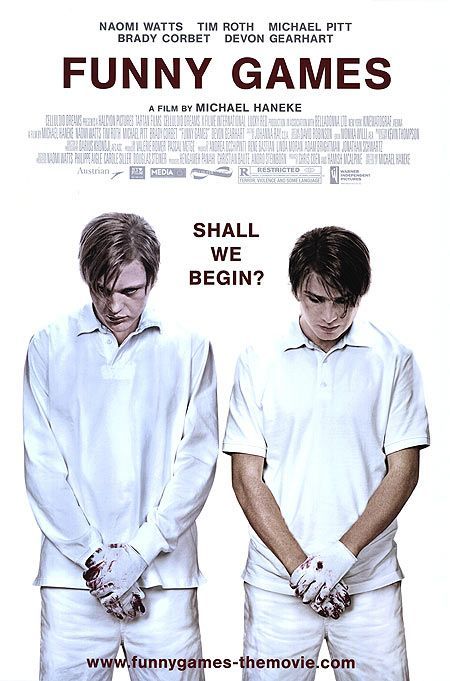
Postmodernism part 5: Funny Games U.S.

The next film we watched for our Postmodernism Lecture was Funny Games U.S.(2008)


The plot of the film is about Paul and Peter meeting the new family around the area acting neighbourly until the two of them holds the family hostage and challenge them into a game. If the family can stay alive by morning, if they do Paul and Peter will leave them alone but it won't be that easy.
This film is postmodern because the creator of the film remade this for the American audience and it kept most of the same scenes from the previous film released in Germany under the same name. It is also a new take on horror because Peter and Paul are not you typical killers. They are polite but also very creepy and they always ask in questions, an example is when Paul had a golf ball in his hand and he asked the family why does he have it, hinting out that he killed someone. What else made this film creepy is that Paul and Peter gave the family many choices but twist it to their favour. The film also constantly breaking the forth wall with Paul talking to audience by saying along the lines of do you want to see this horrible thing thats happening to this sweet family. While Peter plays the role of the audience by questioning the things they are doing like are you sure you want to let them live a little long we could end this right now. Even their origins of why they are torturing the family while in other horror films the killer has a reason why they are killing people but for them they don't they just doing it.
The film also teases the audience a lot too, by having one of the family members escaping but gets caught, having the phone working but can't call no one. Even have Peter getting shot but Paul brought him back to life by turning back time with a remote control.
So in conclusion this film is not meant to be enjoyed if you want a happy ending and it completely teases the audience to a high level.

Narrative Lecture 4: The Day the Earth Stood Still

The next film we watched for our Narrative lecture is The Day the Earth Stood Still 1951 version.


The plot is about an alien named Klaatu who came to earth to deliver an important message to the public, but kept on getting stopped so he decided to hide amongst the people to learned about them and gaining information to find a way to deliver his message.
This movie was known as the first of its kind for being different. Instead of having an alien invasion it has an alien delivering a message to the world. The message is the message of peace letting the people know that if they continue making more weapons of mass destruction they might take their war to an even higher place which is space. So Klaatu came to earth to say there are some aliens who won't stand for that and will prevent this by destroying earth, but they are willing to give earth a second chance by sending their robots to monitor them and if there are any violence they will eliminate it. Klaatu admits this plan isn't perfect but it will get the job done.
I believe what makes this movie successful is how it talks about the violence in the world and it might grow into other areas like space. The movie questions this and asked when will it end, how far will the violence go. What if there was a life form who discovers this and decided to take matters into his own hands by threatening the planet by destroying it. The film itself is a type of warning to the public making them aware that all these violence isn't good and there has to be another way to settle disputes.
People questions if the film is a B Movie or not but the truth is I don't care I thought the effects were good at it's time but where it really shines is the story of Klaatu's quest to bring peace to the world.

Monday, 18 October 2010

Postmodernism Lecture part 4: Moulin Rouge!

This time we looked at a Postmodernism in musical romance, and the film we watched as an example was Moulin Rouge! (2001)


The film is about Christian, a young writer, moving to Paris to learn about love. He went to a cabaret called the Moulin Rouge where he meets an actress name Satine. The two of them fell in love but a jealous duke won't allow it so he is finding different ways to prevent them from being together.

This film was amazing, it uses a lot of cliche romance rules. Examples of this would be the story for having the hero falling in love with a woman who is out of his league. The woman is also involve with someone powerful, but in the end the woman and the hero falls in love. Another part of it's clicheness to romantic stories is when the characters sings out their feelings.
The Postmodernism of the film comes from the music it uses. They are not made up but are actual songs preformed by actual singers. It only has one song that belongs to itself which is the main song but the rest are from other performers. Another example of Postmodernism is the pacing of the film, it began with a very fast pace which I believe is the point of view of Christian where he first entered Moulin Rouge and everything was fast and wild. The film then slows down putting us as the audience once again to see how will this love story will unfold.
This pacing is Postmodern because of how fast the first few minutes started out. You have Christian meeting his neighbours, being invited to the Moulin Rouge, meeting the girl of his dreams, asked to make a play for the Moulin Rouge and keep the love affair a secret from the duke. That when the film slows down you do not remember what happened but you know that Christian have a job of writing a play and has to keep his love affair a secret. In other words in those first few minutes we are Christian and when the film slows down we are back as the audience.

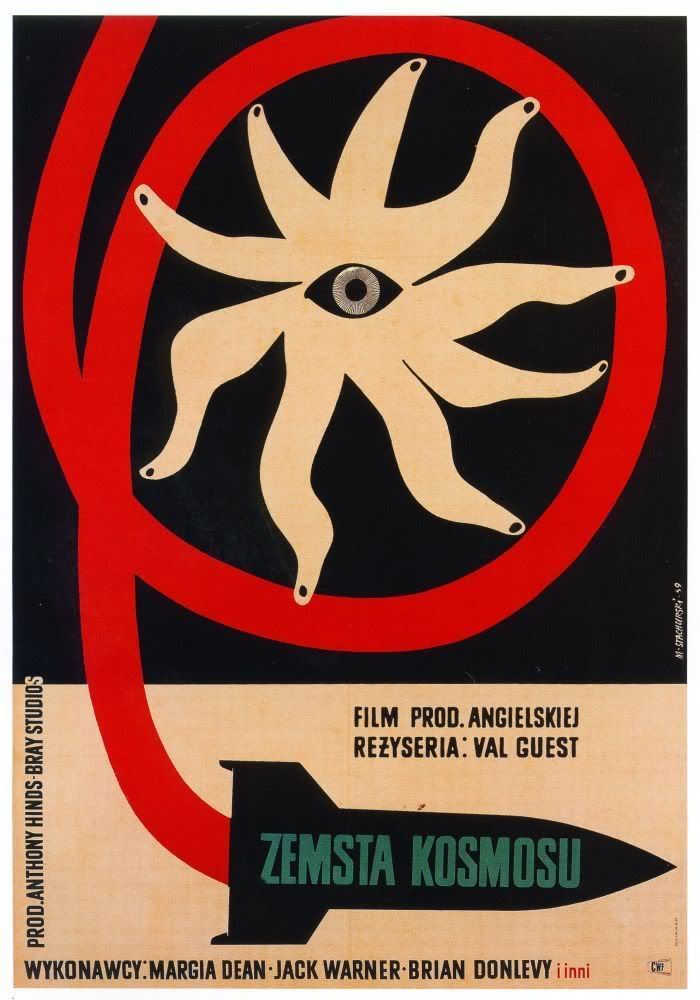
Narrative Lecture part 3: The Quatermass Xperiment

In this part of the lecture we looked at British narrative in film, we observed this by watching 'The Quatermass Xperiment'(1955).


The film began with a spaceship landing in a field causing a disturbance around the area. Police and firemen surrounds the spaceship waiting for their orders from the man who made the ship, Bernard Quatermass.
Once they investigated the ship they only found one survivor, a space engineer named Victor Carron. He was sent to the neariest hospital but before the paramedics left Victor told Quatermass help me.

This film gave off a frightening vibe, because Victor had a zombie like appearance on his face and his actions came out odd. He attacks plants at random and he always gave off the most frightening dead like expression. What also gave this film a scary feel is the way the deadbodies look when victor touched them, the deadbodies are very skinny to the bone which was a very good effect at the time. To help with the scarinest of the film it plays with the mystory of whats happening to Victor, by having some odd outburst and going through changes in his body and mind.
I believe what made this film unique is how it shows a different type of invasion, unlike the old sci-fi films at the time where they had aliens purposly coming to earth to take over. In Quatermass it was a non-contagious bacteria that effected one man and used him to absorb life around him to get itself bigger to send off spores to effect more people.
So in this film it was a bacteria that was threating earth and it was up to Quatermass to stop it because he felt responsible for it. Once he had stop the bacteria he still wants to carry on his experiment, to explore the far regions of space. That is what made this film unique with it's different way of story telling and exicution.

Tuesday, 12 October 2010

Postmodernism Lecture 3: Scream (1996)

The third film I have watched for Postmodernism is 1996 film Scream.


Scream is about a serial killer named Ghostface who is attacking teens and his next target is Sidney. This event reminds her of the murder of her mother which really effects her judgement thinking one of her friends could be the killer.
This movie uses a lot of horror movie references with the killer mysteriously appearing out of nowhere and taunting the victims to having the virgin lives in the end. I really like this movie and I could also see why this is considered Postmodernism because to me it feels like a parody/tribute to old horror films. A great example of Postmodernism would be Ghostface himself, for being a serial killer who is very clumsy and likes to taunt his victims, actual horror serial killers are actually quite silent and very careful on how they move. Yet Ghostface is able to get the job done and the teens actually defends themselves instead of acting foolish most of the time. Plus most of the people watch horror films to find some tips on how to stay alive from Ghostface.
Another example would be the ending where Sidney dressed up as Ghostface and uses his image to scare the actual killers, in old horror movies the female protagonist would never do that they would just run away screaming and end up lucky killing the killer.

Postmodernism Lecture 2: Mulholland Drive

The next movie I have watched, that gave another example of Postmodernism is Mulholland Drive(2001)


Mulholland Drive is about finding out the identity of a woman named Rita, who survived a car accident. The movie also has other miniature side stories like a man who dreamt of meeting a scary figure and it came true. A struggling director who finally gave in to the demands of his producers. And an assassin who struggled at covering up his tracks. But the main story is about Rita finding out who she is and who tried to kill her with the help of her friend Betty, which is some what answered in the end.
What makes this film Postmodernism is the different types of genre that were used in the film. Having a mix of detective stories, comedy, romance and thriller. The film gave me a confused yet amazement feel because it answered some of the questions like who tried to kill Rita but also left some questions unanswered as well, like what was the point of introducing the side characters, what purpose did they have. In the film it also knows that the characters are just characters with different roles and it can treat them however it wants, that the movie is its own character.
Like I mentioned before the ending did some what answered my questions but left some holes as well. The person who wanted to kill Rita was Betty because she was a jealous ex who wanted to make Rita pay. But when she did ordered a hit on Rita, Betty slowly went insane with her guilt and took her own life. At least that what I think, and the way the scene was done was in an explosive feeling, that the third act felt rushed yet not at the same time. Because to me the film is saying we'll give the audience the answer without a lot of padding, things that would drag out the movie even longer. Aleast thats how I see it.

Saturday, 2 October 2010

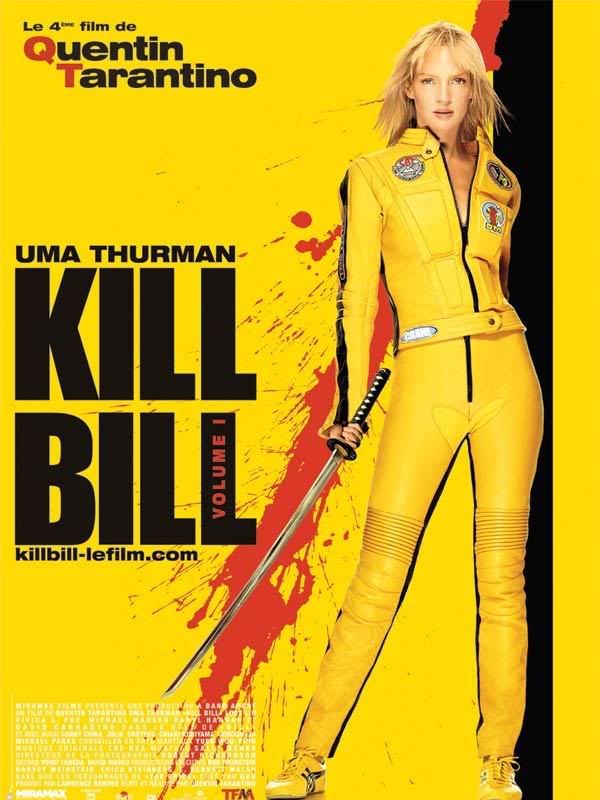
Postmodernism Lecture part 1: Kill Bill

On Wednesday the 22 we had a lecture about Postmodernism and why it is difficult to understand it. It's difficult because Postmodernism can be anything and it has a wide variety. Everyone has a different view on this subject but my general idea on it is that Postmodernism is a type of term used to describe anything that's a spin on modernity, things that were popular in culture for example Scary Movie is a parody of Scream which itself is a Postmodernism because the characters are mocking the horrors films and yet they are in one.

Postmodernism is not limited to just parodies, it can be used to describe media that does a tribute or has inspiration of other media, which brings us to the film I'm reviewing 'Kill Bill'.


The story is about the main character Black Mamba, portrayed by Uma Thurman, on her journey for revenge against the 'Deadly Viper Assassination Squard' for attacking her and almost killing her on her wedding day.
This movie is considered postmodernism because it carries some influence from old martial arts films with the style of how the action is portrayed, her quest for revenge and the level of violence used. There's even an anime cutscene when told of one of the Assassins back stories. All of this help gave this film it's own style and also as a type of tribute for the old action/revenges driven films.

Friday, 1 October 2010

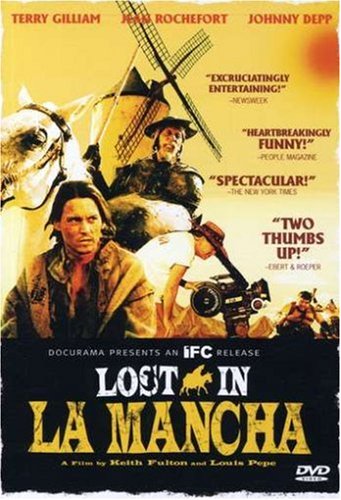
Narrative Lecture part 1: Lost in La Mancha

On Tuesday the 21th we have watched a documentary about a man who had the ambition to make a film but didn't have the budget for it. The name of the documentary is Lost in La Mancha.


The documentary is about Terry Gilliam, who directed Brazil, Jabberwocky, Brothers Grimm and Monty python and the Holy Grail, having trouble making a movie on the story of Don Quixote. The Spanish story of Don Quixote is about man who wants to live in a world of fantasy filled with dragons, giants and knights. To make that world real Quixote decided to imagine it all by making his suit of armor out of pots and pans and goes off into his own little adventure.

It was important to watch this documentary because it shows that if you have the greatest idea ever you still need money to make, and it also shows if you have the money everything still goes wrong. Examples would be if an actor was running late, if shooting outside beware of sudden change of weather and if the actor ends up sick. These events can stop a production of a film in a flash, it does not matter how prepared you are it can still happen.